


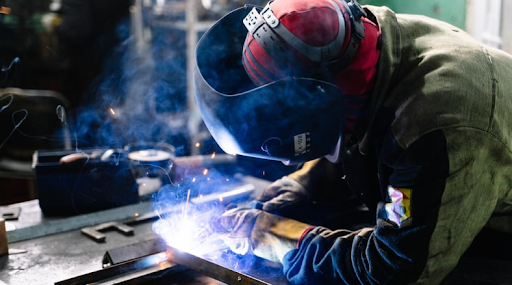
Ensuring clean air is a critical aspect of any professional welding operation. Welding fumes, composed of fine particles and gases, can pose significant risks if not properly managed. The choice between a wall-mounted welding fume exhaust unit and a portable system is a key decision for workshop managers. Each type offers distinct advantages depending on the specific needs of the workspace, the nature of the welding projects, and the overall layout of the facility. Understanding these differences is essential for selecting the most effective solution.
Understanding the Key Differences
The primary distinction between these two systems lies in their mobility and application scope. One provides a fixed, powerful solution for a designated area, while the other offers flexibility for various job sites.
Wall-Mounted Fume Extractors
A wall-mounted unit is a stationary system, typically installed in a dedicated welding bay or a fixed workstation. These systems are known for their power and efficiency in capturing fumes directly at the source.
Benefits of Wall-Mounted Systems
Wall-mounted extractors are ideal for production environments where welding tasks are performed repeatedly in the same location. Their powerful motors and large filtration capacities mean they can handle high volumes of fumes consistently. Because they are fixed, they do not take up valuable floor space, which helps maintain a clear and organized work area. These systems are integrated into the facility’s infrastructure, providing a reliable and long-term solution for air quality management.
Portable Fume Extractors
Portable fume extractors are compact, mobile units designed to be moved wherever they are needed. They are equipped with wheels and a flexible extraction arm, allowing operators to position the capture hood close to the welding point, regardless of location.
Benefits of Portable Systems
The main advantage of portable units is their versatility. They are perfect for maintenance work, on-site repairs, or in workshops where welding stations are not permanent. If a project requires welding in multiple locations throughout a facility, a portable extractor can be easily transported to each spot. This flexibility ensures that effective fume capture is not limited to a single, fixed bay. They are an excellent component of comprehensive welding air filtration systems, especially in dynamic work environments.
Making the Right Choice for Your Workshop
Selecting the appropriate fume extractor depends entirely on your operational needs. If your facility has dedicated welding booths where the majority of work occurs, a wall-mounted system offers a powerful, space-saving, and efficient solution. It’s a “set it and forget it” approach for a static workflow.
Conversely, if your work involves moving around a large component, performing repairs in different areas, or operating in a job shop with a frequently changing layout, the flexibility of a portable unit is invaluable. It ensures that fume extraction can be applied precisely where the work is happening. In many cases, a combination of both types of systems provides the most comprehensive coverage for a facility.
Conclusion
Ultimately, the goal is to provide effective fume capture at the source to maintain a clean and safe working environment. Evaluating your workshop’s layout, workflow, and the types of welding jobs performed will guide you toward the best equipment choice. A careful assessment of these factors ensures you invest in a solution that effectively addresses your specific air quality needs and supports a productive operation.
Apart from that, if you want to know more about Benefits of Outsourcing Warehouse & Distribution Services then visit our Business category.
